
Report on the genesis of the ADELIE system system: a French innovation born of a need in the field.
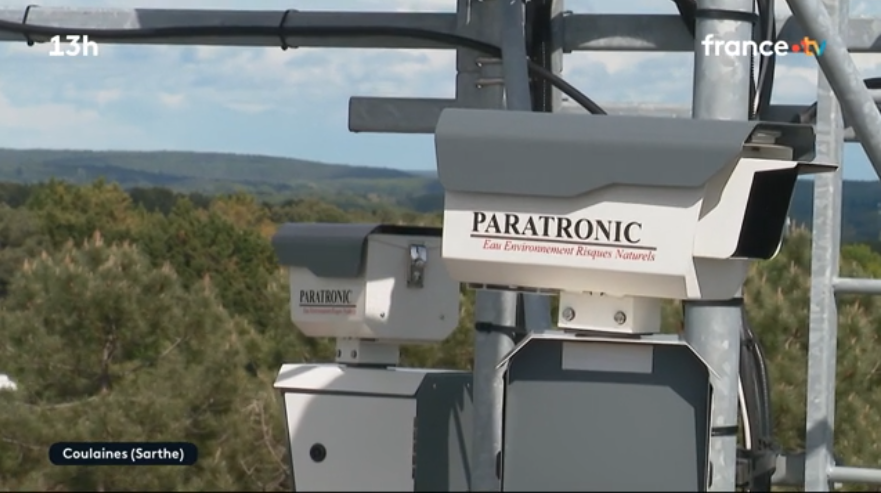
The ADELIE system: an early fire detection system
This report looks back at the origins of the ADELIE system, developed almost 20 years ago by PARATRONIC at the request of the fire department. A pioneering innovation, today at the heart of firefighting in natural environments.
A demand from the field, a technological response
In 2005, firefighters asked PARATRONIC to design an unprecedented tool: an early fire detection system capable of visually recognizing the first signs of smoke from a great distance. This was the start of the ADELIE adventure.
Patrice RILLY, President of PARATRONIC, explains:
"The fire department needed a system capable of spotting fires before they got out of control. There was nothing reliable on the market. We designed a device combining camera and image analysis, to identify the finest smoke, as early as possible."
Like the old lookouts, ADELIE cameras are installed on high points to maximize visibility of the natural environment.
Pierre-Moana LEVESQUE, Director of Research and Development at PARATRONIC, explains:
"When a fire starts 20 kilometers away, the human eye sees nothing. But the artificial intelligence embedded in our cameras can spot smoke, and above all, distinguish it from a simple cloud or mist."
Detection is automated, but the human being remains the decision-maker:
"Once the alert has been transmitted to the command center, a second camera enables the firefighter to clear up any doubts, confirm the outbreak of fire and pinpoint its precise location on the map. This is what enables rapid intervention.
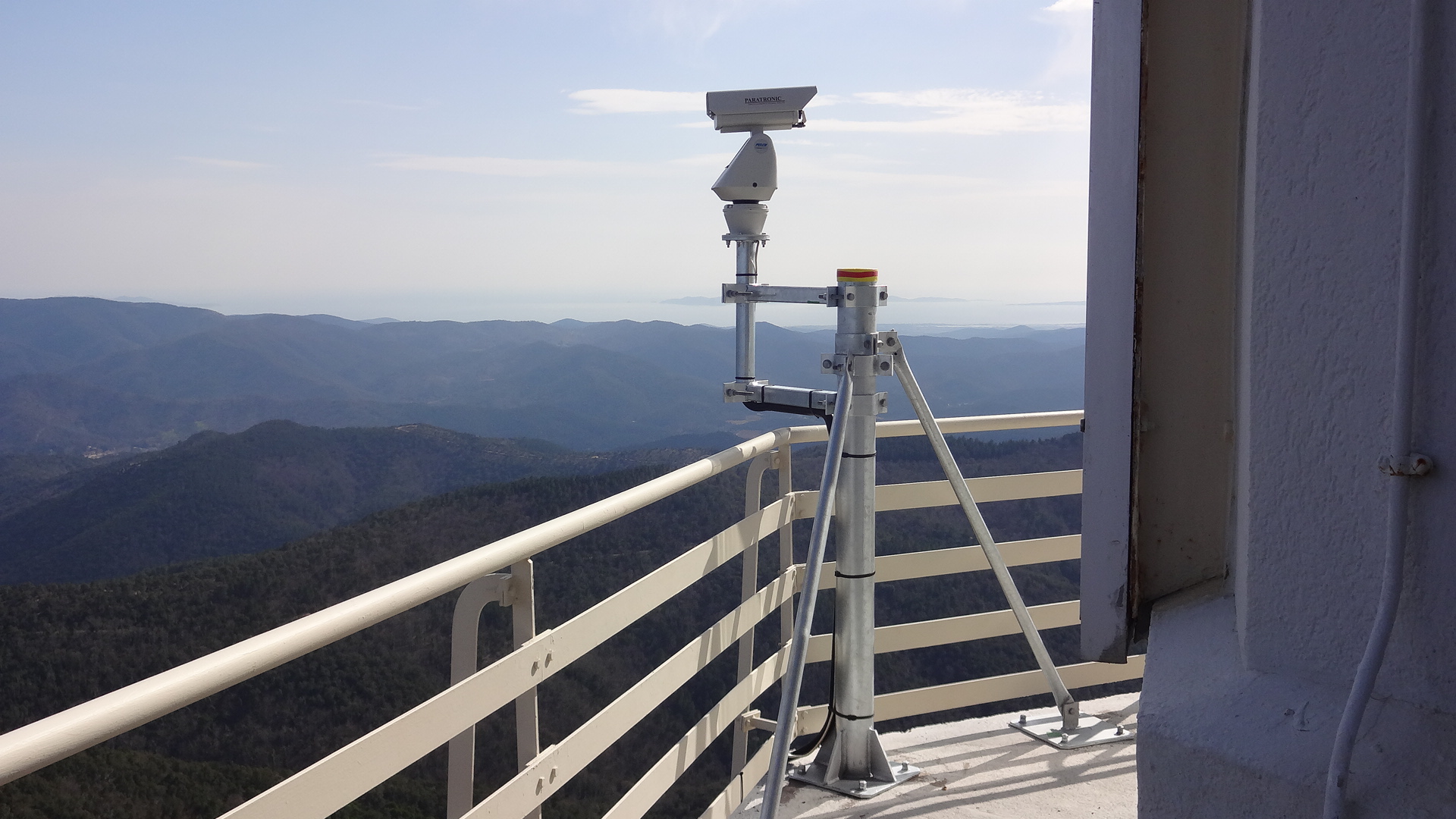
PARATRONIC camera for the ADELIE system at SDIS83
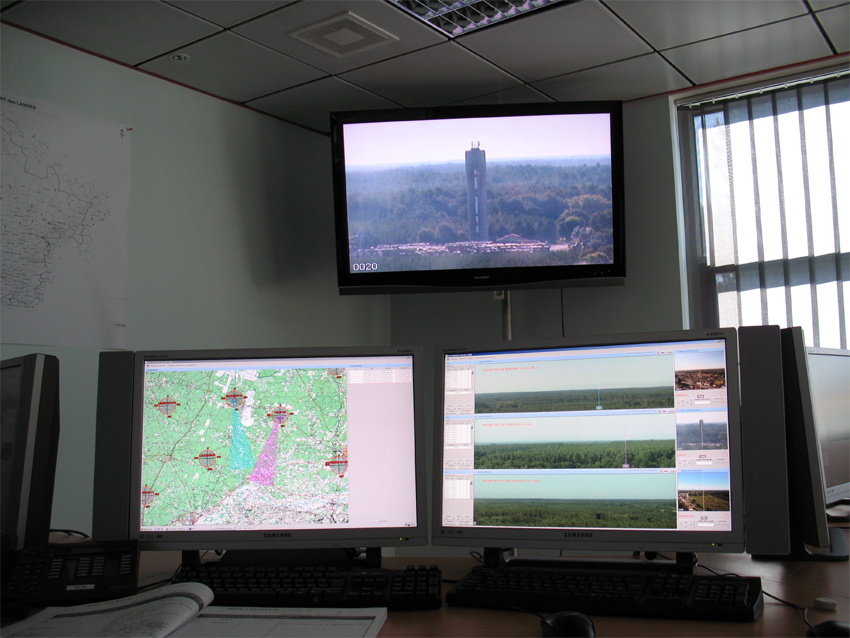
The ADELIE system on the SDIS40 control screens
Eric Brocardi, President of the Fédération nationale des sapeurs-pompiers de France, provides a clear vision of the potential of artificial intelligence in interventions:
"When we talk about forest fires and AI or digital means, it will enable us to analyze the topography in real time, anticipate the progression of a fire and sometimes model different disasters that have occurred in the past. We can model possible propagation, position equipment, anticipate air drops... and at the same time guarantee a certain level of safety for personnel."
Visual data is cross-referenced between two cameras to enable triangulation: the point of origin of the fire is pinpointed. This responsiveness is the strength of the system, because when it comes to fire, every minute counts.
Operational deployment in France
Today, the #ADELIE system is operational in 9 SDIS (Services Départementaux d'Incendie et de Secours): Sarthe (72), Maine-et-Loire (49)Charente-Maritime (17), Lot-et-Garonne (47), Landes (40), Aude (11), Hérault (34), Alpes-de-Haute-Provence (04), Var (83).
At PARATRONIC, we firmly believe that technology is a support for human decision-making, not a substitute for it.
As Eric Brocardi, President of the Fédération nationale des sapeurs-pompiers de France, reminds us:
"AI facilitates anticipation, but it's still the human who's in charge. Experience in the field remains paramount."
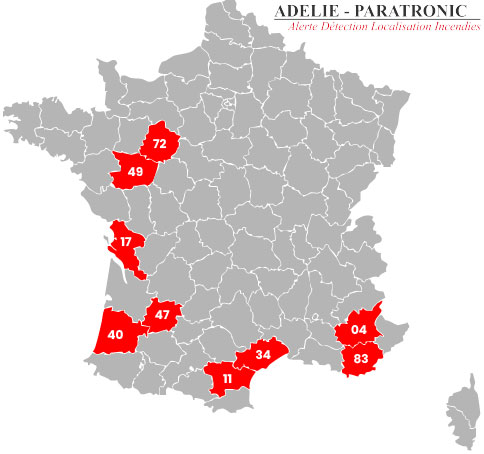
Department with ADELIE system
PARATRONIC would like to thank our SDIS partners and all those involved in civil protection who, every day, protect our territories with courage and dedication.
And thanks to the RCF team for the report.
The ADELIE PARATRONIC system detects and locates forest fires, but is only part of the forest fire prevention and control actions carried out by the SDIS and the entities of the Ministry of the Interior's General Directorate for Civil Security and Crisis Management.
Forest fires: drones and AI to support firefighters @RCF
News
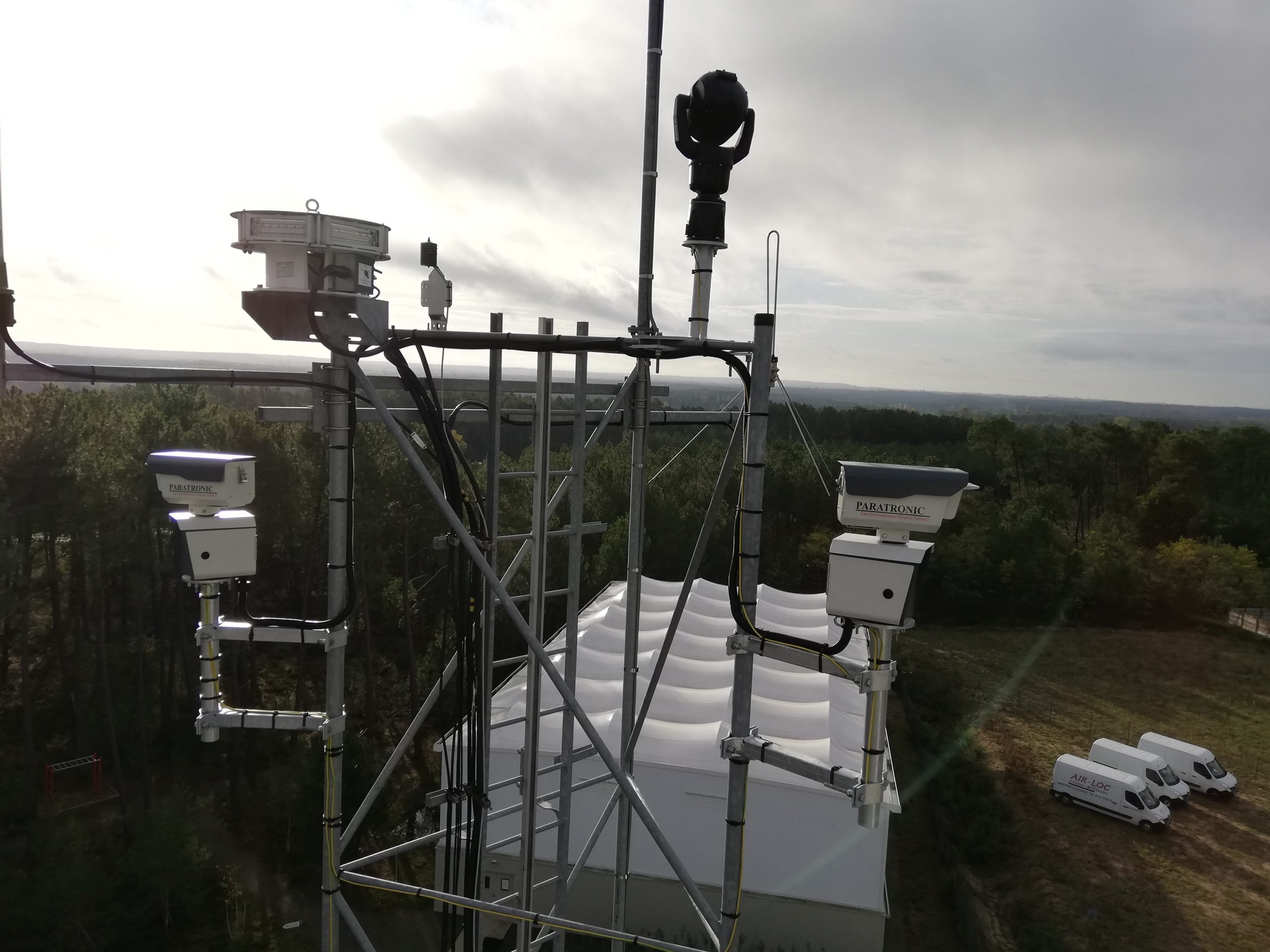
Implementation of the ADELIE system for detecting forest and natural area fires for the SDIS72
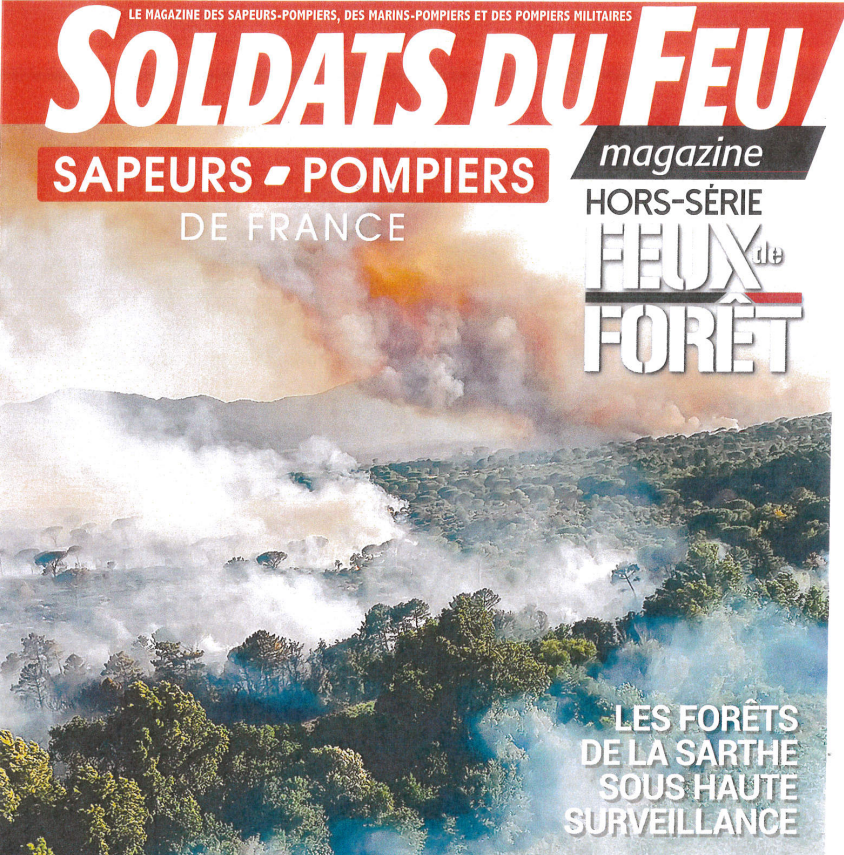
ADELIE system implemented at the SDIS72: all the details in the special issue n°27 of Soldats du Feu magazine.
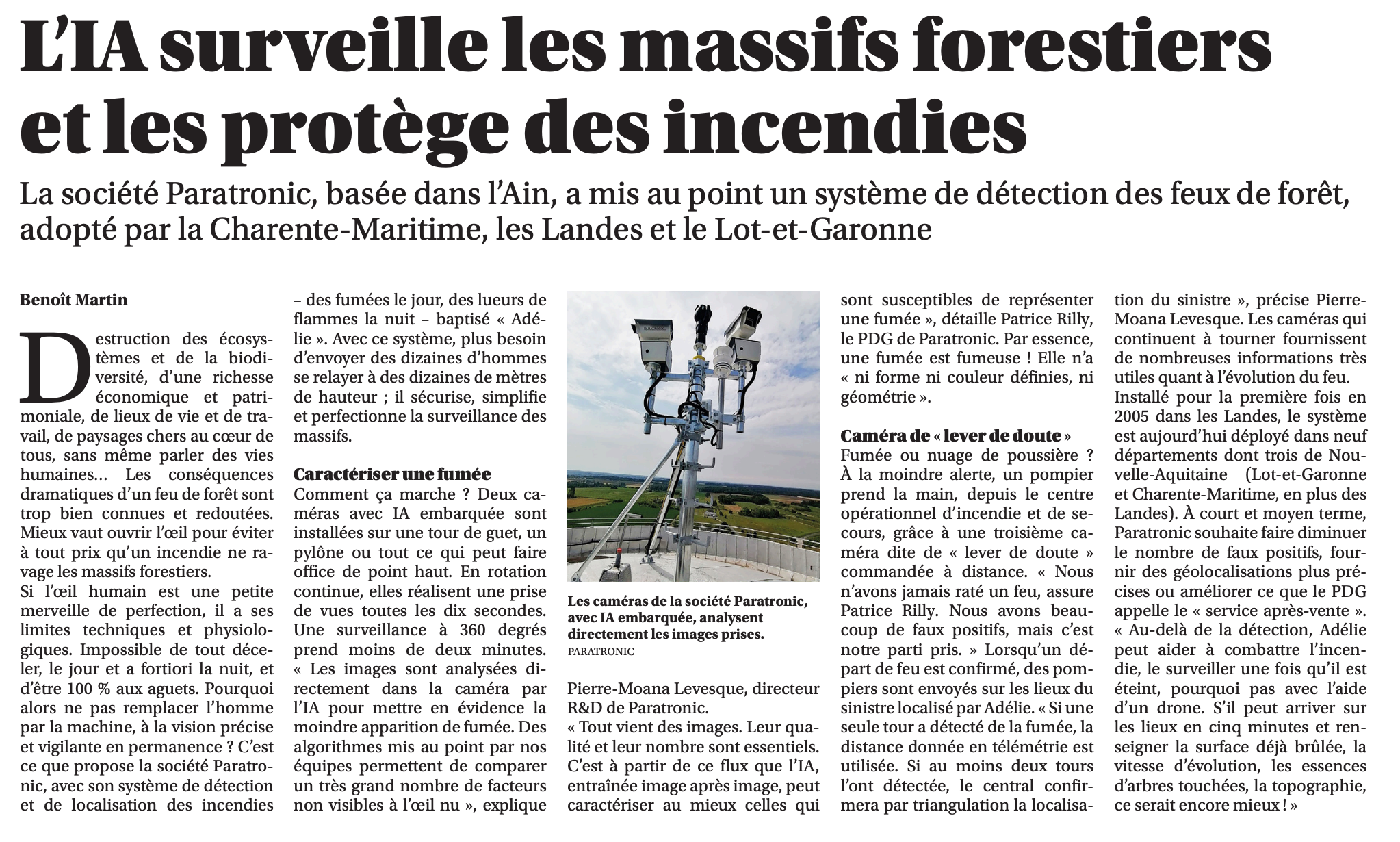
AI monitors forest areas with the ADELIE system: an early fire detection solution.
The ADELIE system, developed by PARATRONIC, uses multispectral cameras and artificial intelligence to continuously monitor forest areas. It detects smoke during the day and the glow of flames at night, and provides a precise location of fire outbreaks. The ADELIE system has been adopted by a number of French départements, and is designed to simplify and enhance surveillance of high-risk areas in natural environments.

Paratronic
Industrial Zone Rue des Genêts
01600 REYRIEUX
T : +33(0) 4 74 00 12 70
F : +33(0) 4 74 00 02 42
Follow us on social networks


Contact us
Would you like to know more about our products or services? Call us directly at
+33(0) 4 74 00 12 70 or write to us.