
Articles
When managing infrastructure related to the water cycle (wells, reservoirs, pumping stations, or booster stations) and hydrology (hydrometric stations, remote piezometers, etc.), data reliability is the top priority.
However, in the field, your 4–20 mA measurement loops are frequently exposed to electromagnetic interference, atmospheric noise, or potential conflicts (issues with common ground connections).
As experts in instrumentation, we regularly receive questions about the best way to isolate and duplicate these analog signals.
Here is our comprehensive guide to effectively securing your facilities.
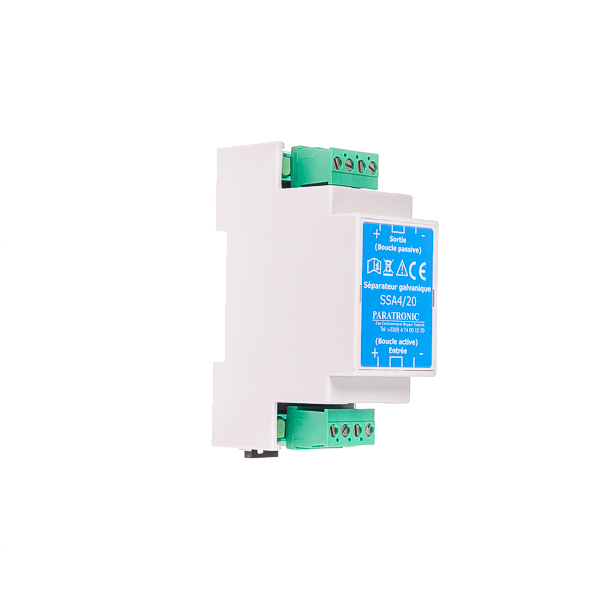
A galvanic isolator (or isolator) is designed to electrically isolate two circuits.
Its primary function is to permanently eliminate interference and potential conflicts between your various field devices and your data acquisition systems (controllers, measurement units). By isolating the analog circuits, you protect the 4–20 mA signal from induced interference, thereby ensuring the accuracy of your measurements.
If your goal is purely efficiency and ease of integration, the SSA 4/20 is the ideal solution.
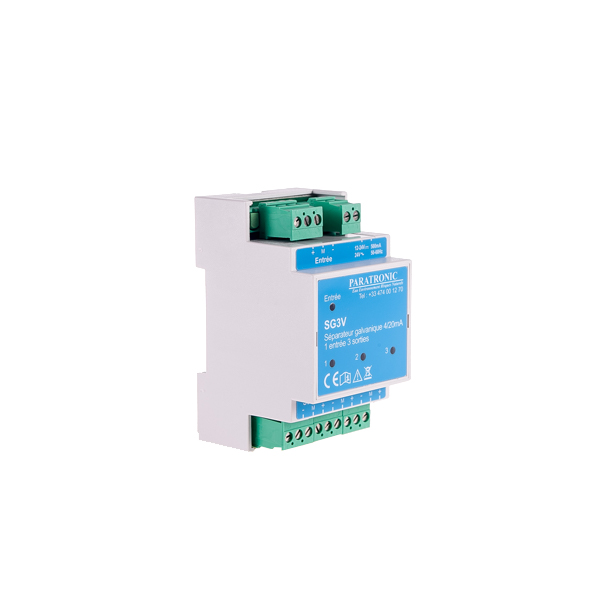
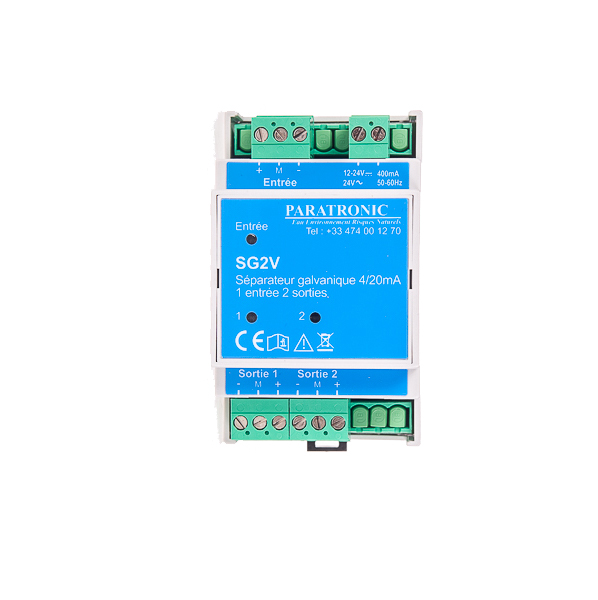
When your isolator requires power, or if your network architecture requires the same field data to be transmitted to multiple separate data acquisition or display systems, you should choose our powered galvanic isolator models.
Improved performance: The powered version allows the use of high-impedance lines with excellent accuracy of ±0.1% at 25°C.
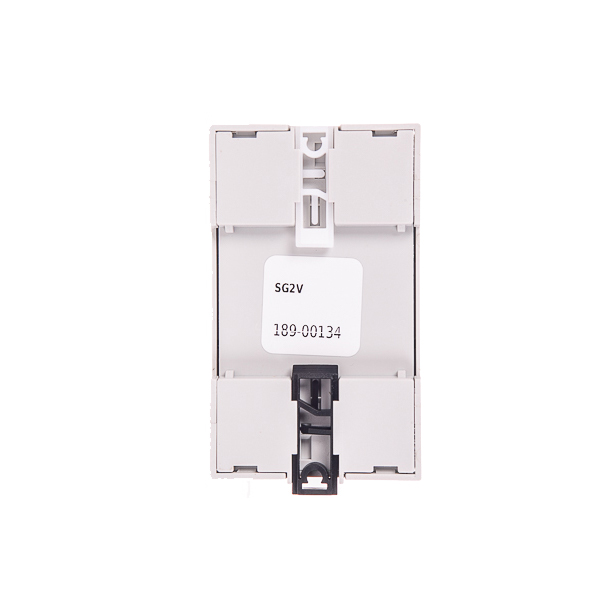
Our equipment is designed to make it as easy as possible for your maintenance teams to work in the field:

All of our products are developed and manufactured in France, directly at our factory in Reyrieux, in the Ain department (01).
Our experts are available Monday through Friday to review your wiring diagrams.
Contact us or by phone at +33 (0)4 74 00 12 70.

Paratronic
Industrial Zone Rue des Genêts
01600 REYRIEUX
T : +33(0) 4 74 00 12 70
F : +33(0) 4 74 00 02 42
Follow us on social networks


Contact us
Would you like to know more about our products or services? Call us directly at
+33(0) 4 74 00 12 70 or write to us.